How Website Speed Increased Leads: The 2026 Conversion Guide

Credentials: Founder of Zynocode IT Solutions. Expertise in enterprise architecture, Next.js, and business automation.
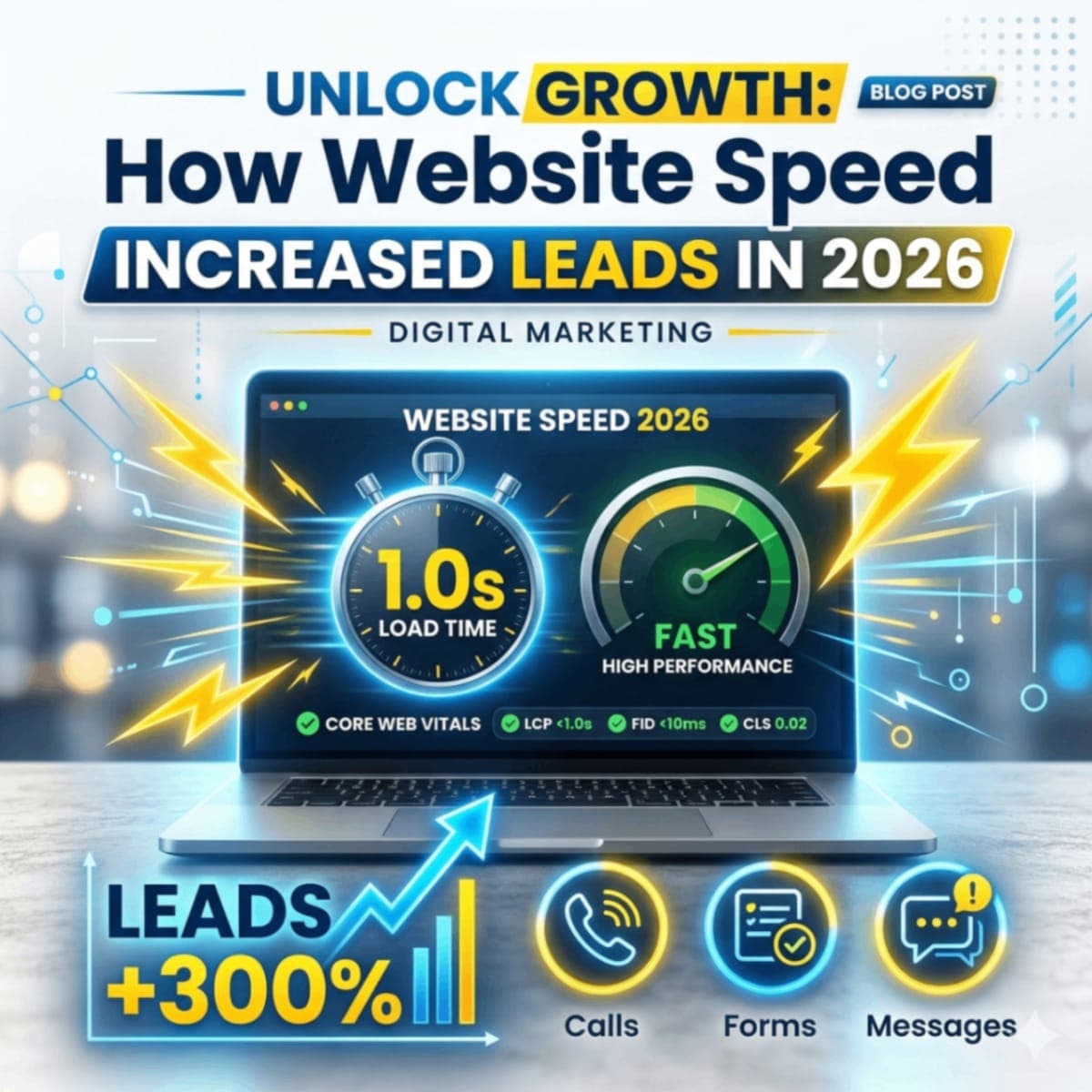
> TL;DR: Website speed increases leads by removing technical friction, capturing user attention instantly, and establishing psychological trust with visitors. In 2026, faster load times prevent bounce rates and signal brand reliability, which significantly boosts form submissions and purchases. Additionally, optimized performance improves search engine rankings, driving higher volumes of high-intent organic traffic to your site.
In the highly competitive digital landscape of 2026, data consistently shows that website speed increased leads by removing the technical barriers between a user and their solution. When a potential customer clicks on your link, they expect an instantaneous response, and any delay directly translates into lost revenue and higher bounce rates.
Why Website Speed Increased Leads Across Every Industry in 2026
Speed is no longer a luxury but a fundamental requirement for business survival. In 2026, the correlation between performance and profit has never been clearer. When we analyze modern consumer behavior, we see that users equate fast loading times with professional reliability. A website that loads in under one second signals to the user that the company is efficient, technologically advanced, and respectful of their time. This psychological trust is the primary reason why website speed increased leads for our diverse portfolio of clients.
Furthermore, search engines have evolved to prioritize user-centric metrics more aggressively than ever before. Google’s algorithms in 2026 place immense weight on real-world interaction data. If your site is sluggish, it won't just frustrate users; it will actively drop in search rankings, reducing your visibility. By investing in Website Development Services, businesses are essentially building a high-performance engine designed to capture and convert traffic before the competitor’s page even finishes loading. The math is simple: faster sites keep users engaged longer, and engaged users are significantly more likely to fill out inquiry forms or complete a purchase.
The Psychological Connection Between Load Times and User Trust
User experience is deeply rooted in psychology. When a page takes more than two seconds to load, the user’s cognitive flow is interrupted. This interruption creates a micro-moment of frustration, which is often subconsciously associated with the brand itself. In 2026, where attention spans are measured in milliseconds, providing a seamless transition from a search result to a landing page is critical. High-performance UI/UX Design focuses on perceived performance as much as actual performance, ensuring that even as data is being fetched, the user feels the site is responsive.
According to HubSpot, even a one-second delay in page load time can result in a massive reduction in conversions. This statistic highlights that speed is the silent salesman of the digital world. When a site is lightning-fast, the friction of decision-making is reduced. Users are more willing to navigate through multiple pages, read your case studies, and eventually reach your CTA. This extended session duration is a key indicator that your technical foundation is supporting your marketing goals.
Technical Strategies Where Website Speed Increased Leads for Our Clients
To achieve the level of performance required in 2026, we utilize a multi-layered optimization strategy. We have seen time and again that website speed increased leads most effectively when technical debt is eliminated. This involves optimizing the critical rendering path, ensuring that the most important content—the Largest Contentful Paint (LCP)—appears almost instantly. By prioritizing the delivery of above-the-fold content, we satisfy both the user's curiosity and the search engine's requirements.
Our team often integrates advanced Web Application Development techniques such as server-side rendering (SSR) and static site generation (SSG) to ensure that pages are pre-rendered and ready for delivery. Additionally, the implementation of modern image formats like AVIF and WebP, combined with sophisticated lazy-loading scripts, ensures that visual assets do not bog down the initial load. For businesses looking for a real-world example of this in action, our post on How a 1-Second Website Increased Leads by 3X provides a detailed breakdown of the transformation process and the resulting lead surge.
Implementing Core Web Vitals for Maximum Conversion Impact
Core Web Vitals remain the gold standard for measuring web performance in 2026. These metrics—LCP, Interaction to Next Paint (INP), and Cumulative Layout Shift (CLS)—provide a holistic view of how a user experiences your site. A site that scores in the 'Green' across all these metrics is statistically more likely to retain visitors. When we perform Website Speed Optimization: Improve Core Web Vitals Fast, we aren't just chasing scores; we are refining the lead generation funnel.
Interaction to Next Paint (INP) is particularly crucial for lead generation. If a user clicks a 'Submit' button on a lead form and the site hangs for a second before showing a confirmation, the user may think the submission failed and click again, or worse, leave the site entirely. By optimizing script execution and reducing main-thread blocking, we ensure that every interaction is snappy. This reliability is why we emphasize that website speed increased leads by fostering a sense of security and competence during the most critical part of the user journey—the conversion point.
The Zynocode Methodology for High-Performance Web Architecture
At Zynocode, our approach to performance is integrated into every stage of development. We don't build a site and then try to 'fix' its speed; we architect for speed from day one. This begins with selecting the right tech stack. Whether it is a headless CMS or a custom-built framework, we ensure the backend is capable of handling high traffic without latency. Our SEO & Digital Marketing experts work alongside our developers to ensure that every line of code serves a purpose for both the user and the search engine.
We also implement robust caching strategies and Content Delivery Networks (CDNs) to reduce the physical distance between your data and your users. This is especially important for local businesses. If you are following a Local SEO Checklist UK Small Business, you know that local relevance is amplified when the site loads instantly for local users. Our methodology includes regular performance audits and automated monitoring to ensure that as you add new content, your speed remains optimal. This proactive stance is a core part of our IT Support & Maintenance packages, ensuring that your lead generation machine never slows down.
Analyzing the Cost of Slow Performance on Your Bottom Line
Many businesses view speed optimization as a technical expense rather than a strategic investment. However, when you calculate the cost of lost leads, the perspective shifts. If your current conversion rate is 2% with a 4-second load time, and increasing your speed to 1.5 seconds boosts that conversion rate to 4%, you have effectively doubled your revenue without spending an extra penny on advertising. This is the most cost-effective way to scale a business in 2026.
Slow websites also increase your Cost Per Acquisition (CPA) in paid advertising. If you are running Google Ads, a slow landing page results in a lower Quality Score, which means you pay more for every click. By ensuring your website speed increased leads, you are also making your entire marketing budget work harder. We often see clients who are struggling with their How to Rank Business [Google Maps Top 3](/blog/rank-business-google-maps-top-3-uk-us) strategy find that improving their mobile site speed is the missing piece of the puzzle that finally pushes them into the top rankings.
Future-Proofing Your Digital Presence for 2026 and Beyond
As we look further into 2026, the arrival of more complex web technologies like AI-driven interfaces and 3D web elements will put even more strain on traditional hosting and development methods. Future-proofing your site means adopting a 'performance-first' mindset today. This involves moving away from bloated, multipurpose themes and toward lean, custom-coded solutions that only load the assets required for the specific page being viewed.
By partnering with a team that understands the deep technical nuances of modern web performance, you ensure that your business remains competitive. We have seen that website speed increased leads for companies that were previously stagnant, simply by making their content accessible and fast. In a world where your competitor is only a 'back' button away, speed is your greatest competitive advantage. Invest in your site’s performance today, and watch as your lead volume and quality reach new heights in the coming year. In conclusion, the evidence is undeniable: website speed increased leads by creating a friction-free environment where users feel confident and compelled to take action.
What is it? **Definition:** Website speed optimization is the technical process of minimizing page load times to enhance user experience, build visitor trust, and maximize lead conversion rates.
Dive deeper into our sibling spoke: B2B Wholesale Portals for Jodhpur Furniture Manufacturers ↗
Frequently Asked Questions

Written by Prashant Sharma
Founder & Technology StrategistPrashant Sharma is the Founder & CEO of Zynocode IT Solutions. As a seasoned tech visionary, software architect, and digital growth consultant, he leads enterprise engineering strategies, high-performance web systems, and custom AI implementations. Under his leadership, Zynocode has built a reputation as the premier website development company in Jaipur and a trusted AI automation agency in Jaipur delivering high-end solutions globally. For a detailed breakdown of his professional career and technical achievements, visit his dedicated Founder Profile page.
⚡Recommended Architecture & Delivery Hubs
Verified Guides & PodsRelated Services
Related Articles
B2B Wholesale Portals for Jodhpur Furniture Manufacturers
Read article →Web DevelopmentModern SaaS Architecture 2026: Next.js
Read article →Web DevelopmentShopify Website Developer Jaipur: Build Your Store
Read article →Web DevelopmentExpert MVP Development Jaipur Services for Startups & SMBs
Read article →Free Tools from Zynocode Labs
100% in-browser • Zero server uploads • No account required
Client-Side Image Compressor
Compress WebP, PNG, and JPEG assets in-browser for 100/100 Core Web Vitals.
SVG Optimizer & Minifier
Clean unneeded XML attributes and minify SVG icons for fast web delivery.
JSON Formatter & Schema Validator
Format, validate, and inspect JSON-LD structured data and API responses.