ERP Integration for Jodhpur Handicraft Exporters

Credentials: Core engineering team specializing in enterprise architecture, Next.js, and cloud automation.
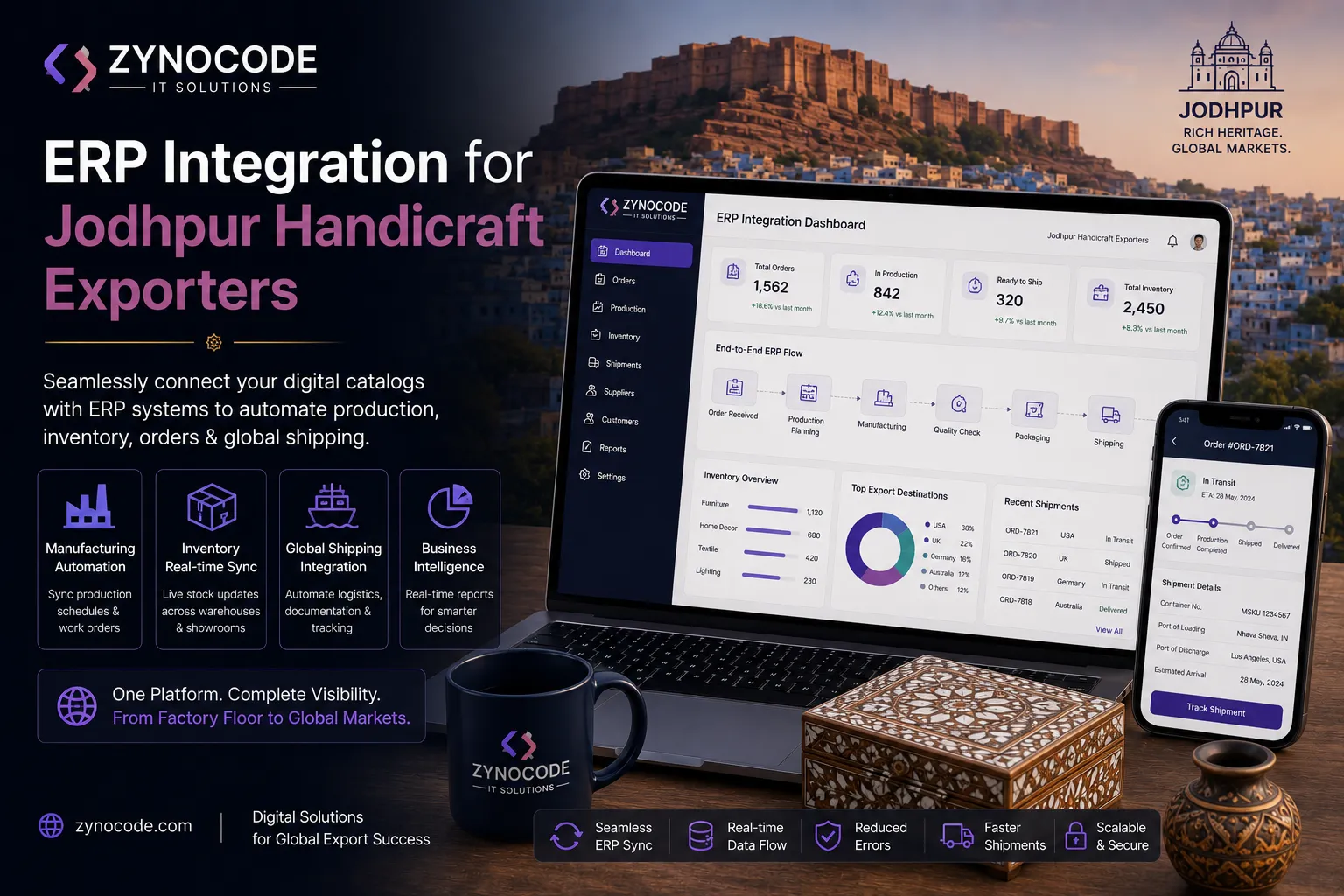
> TL;DR: ERP integration for Jodhpur handicraft exporters connects custom digital front-end catalogs directly with backend manufacturing systems. This seamless data flow automates inventory tracking, coordinates production schedules, and streamlines international shipping logistics, dramatically reducing manual errors and operational overhead.
What Is ERP Integration?
ERP integration is the technical process of connecting a company's front-end digital catalog or B2B portal directly with its backend Enterprise Resource Planning (ERP) software to ensure real-time data synchronization.
Why Integration Matters for Jodhpur Handicrafts
Jodhpur’s handicraft export market operates on a massive scale, moving raw materials like wood and iron through complex manufacturing stages before international container shipping. When front-end digital catalogs are disconnected from backend factory systems, businesses face severe bottlenecks.
Without integration, an overseas buyer might place a bulk order for an item that lacks the necessary raw materials in the warehouse. Staff must manually copy order details between systems, leading to costly data entry errors, delayed production schedules, and frustrated international clients.
How ERP Integration Works
Connecting these systems creates a unified, automated digital ecosystem.
1. Real-Time Inventory Syncing When raw materials are consumed in the factory, the ERP updates the digital catalog immediately. If an item is out of stock or faces a long lead time, buyers see this instantly, preventing unfulfillable orders.
2. Automated Production Triggers When a bulk order is placed through the B2B portal, the integration automatically generates a bill of materials (BOM) and routes production tickets directly to the factory floor, bypassing manual managerial approval chains.
3. Shipping and Logistics Tracking Once an order is manufactured and packed, the ERP generates international shipping manifests. Tracking numbers and container statuses are automatically pushed back to the client’s dashboard on the digital portal.
Practical Steps to Implementation
- 1Assess Your Current ERP: Determine if your existing ERP supports modern API connections (REST or GraphQL). Legacy systems may require middleware.
- 2Define Data Workflows: Map out exactly which data needs to move between systems (e.g., product specs, stock levels, order status).
- 3Develop API Connectors: Engage a development team to build secure, two-way API integrations between your web platform and your factory software.
- 4Test with Staging Environments: Rigorously test the integration in a sandboxed environment to ensure orders trigger the correct manufacturing workflows before going live.
Common Mistakes to Avoid
- Ignoring Edge Cases: Failing to account for canceled orders or partial shipments can lead to system desynchronization. Ensure your integration handles status reversals gracefully.
- Overlooking Security: Exposing your backend ERP to the internet requires strict authentication (like OAuth2) and rate limiting to prevent data breaches.
- Lack of Error Logging: If an API call fails, the system must log the error and notify an administrator. Silent failures result in lost orders.
Conclusion
For Jodhpur's handicraft exporters, a beautiful digital catalog is only half the battle. By deeply integrating front-end portals with robust backend ERP systems, exporters can achieve the operational efficiency required to scale globally and handle massive international orders with precision.
Related Zynocode Services Explore our [custom web applications](/services/web-applications-development) to see how we can build similar solutions for your business.
Further Reading If you found this useful, you may also want to read our article on [headless e-commerce platforms](/blog/headless-ecommerce-development-jodhpur-exporters).
<RelatedPosts targetPath="/india/jodhpur" />
Dive deeper into our sibling spoke: 3D Marble Visualization Tools for Kishangarh Exporters ↗
Frequently Asked Questions

Written by Prashant
Engineering & Growth TeamWritten by a core engineering member at Zynocode, a leading custom software development company in Jaipur. Our team builds high-performance Next.js systems, mobile applications, and provides specialized expert generative engine optimization services for modern digital enterprises.
Related Services
Related Articles
3D Marble Visualization Tools for Kishangarh Exporters
Read article →E-CommerceHeadless E-Commerce Development for Jodhpur Exporters
Read article →Custom SoftwareDigital Inventory Portals for Kishangarh Marble Factories
Read article →Web DesignCustom Web Design for Heritage Hotels in Ajmer & Pushkar
Read article →Free Tools from Zynocode Labs
100% in-browser • Zero server uploads • No account required
Client-Side Image Compressor
Compress WebP, PNG, and JPEG assets in-browser for 100/100 Core Web Vitals.
SVG Optimizer & Minifier
Clean unneeded XML attributes and minify SVG icons for fast web delivery.
JSON Formatter & Schema Validator
Format, validate, and inspect JSON-LD structured data and API responses.