Developing Independent Direct Booking Engines for Hotels

Credentials: Founder of Zynocode IT Solutions. Expertise in enterprise architecture, Next.js, and business automation.
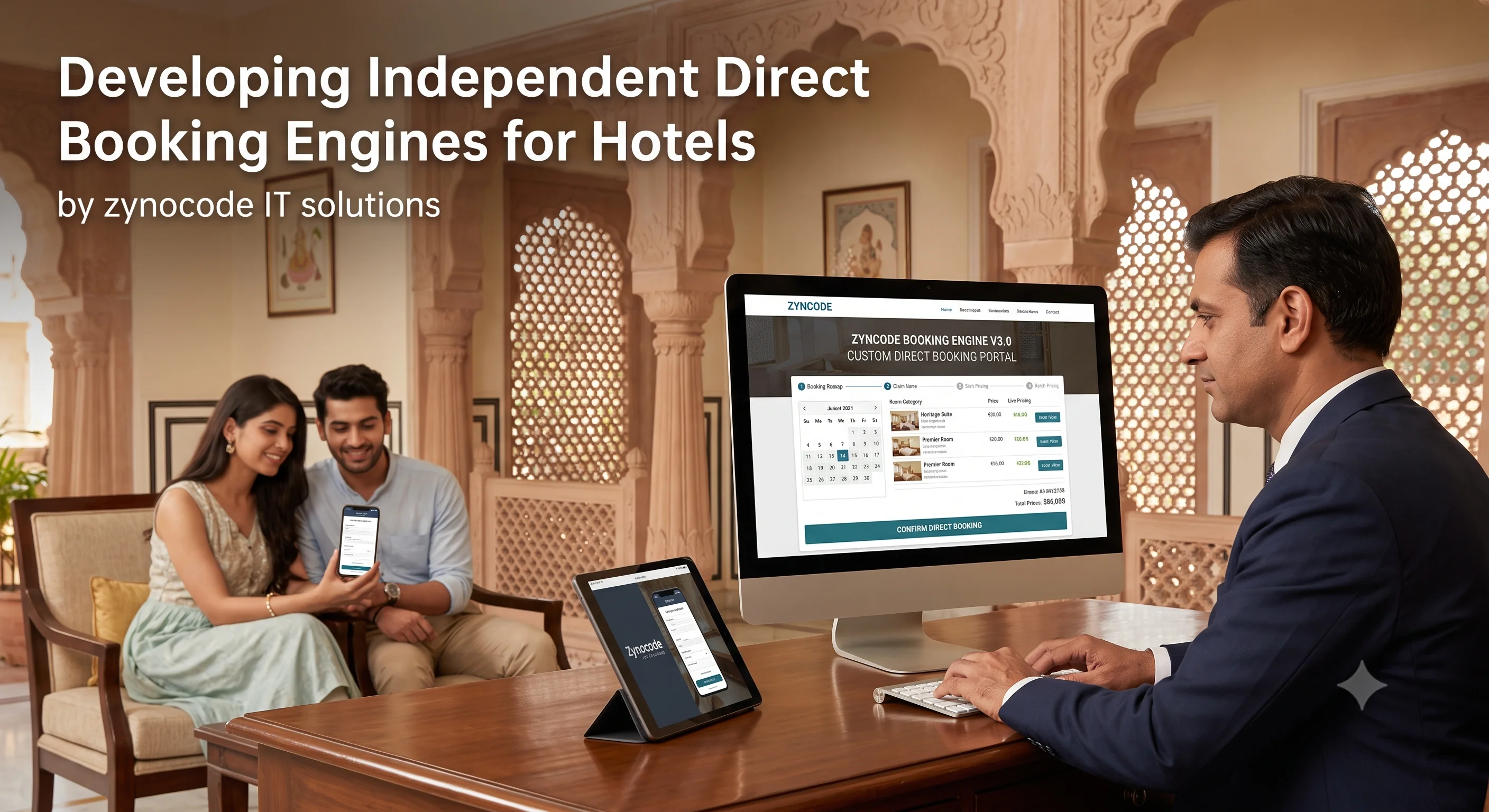
> TL;DR: Independent direct booking engines allow hotels to process reservations natively on their own websites, eliminating heavy commission fees paid to Online Travel Agencies (OTAs). Custom hospitality web applications empower properties to own their guest data and increase direct revenue.
What Is a Direct Booking Engine? A direct booking engine is a specialized software application integrated into a hotel's website that allows guests to check room availability, select dates, and securely pay for their reservation without leaving the site. Unlike third-party widgets that redirect users to external portals, a custom engine is natively built into the hotel's digital infrastructure, ensuring complete control over the booking flow, branding, and customer data collection.
For independent hotels and resorts, moving away from an OTA-dependent model requires establishing a frictionless direct-booking channel.
Why Hotels Must Reduce Reliance on Third-Party OTAs Hotels across tourism-heavy regions, such as the hospitality sector in Ajmer and Pushkar, often rely heavily on Online Travel Agencies (OTAs) like Booking.com or Agoda to fill their rooms. While OTAs provide visibility, they present significant structural challenges for long-term profitability:
- High Commission Fees: OTAs take a substantial percentage of every booking. For a mid-sized independent hotel, these fees drain capital that could otherwise be reinvested into property upgrades or direct marketing.
- Loss of Guest Data: When a guest books through an OTA, the hotel rarely receives the guest's actual email address or direct contact information. This makes post-stay marketing and loyalty program enrollment impossible.
- Brand Commoditization: On an OTA platform, a unique heritage hotel is reduced to a thumbnail and a price tag, competing directly against dozens of similar listings on the same page.
By collaborating with a Ajmer web development services, local hoteliers can build custom booking platforms that recapture revenue and guest relationships.
How Custom Hospitality Web Applications Work A custom-built direct booking engine is a complex web application that connects the frontend user experience with backend inventory logic.
Real-Time Room Inventory Management To prevent double-booking, the custom engine must synchronize instantly with the hotel's Property Management System (PMS) or Channel Manager. When a room is booked directly on the website, an API call is fired to the PMS, which then automatically updates availability across all other connected channels (including OTAs) in real-time.
Secure Payment Gateway Integrations Trust is paramount during the booking process. Custom engines integrate PCI-compliant payment gateways natively into the checkout flow. Guests can pay via credit card, UPI, or international wire without being redirected to a suspicious-looking third-party domain, dramatically reducing cart abandonment.
Steps to Launch an Independent Booking System Building a direct booking channel requires careful technical planning:
- 1PMS Integration Audit: Verify that your current Property Management System supports two-way API communication. If it relies on outdated legacy software, a PMS upgrade may be required first.
- 2UX/UI Design: Map out a highly visual, mobile-first booking flow. The fewer clicks it takes for a guest to transition from browsing photos to entering their credit card, the higher the conversion rate.
- 3Application Development: Utilize a robust custom software development framework like React to build the frontend, ensuring the calendar loads instantly on mobile networks.
- 4Payment and Security Configuration: Implement SSL encryption and integrate local and international payment gateways.
- 5Marketing Alignment: Once the engine is live, launch targeted SEO and Google Hotel Ads campaigns to drive traffic directly to the new portal.
Common Mistakes When Building Hotel Websites Hoteliers often make critical mistakes that cripple their direct booking potential: * **Using Clunky Iframe Widgets:** Embedding a slow, unbranded third-party booking widget breaks the visual immersion and often fails to load properly on smartphones. * **Hiding the 'Book Now' Button:** The Call-To-Action must be sticky and visible on every single page of the website. * **Ignoring Page Load Speeds:** A website with stunning high-resolution gallery images will fail to convert if those images take ten seconds to load. Advanced image optimization and CDN integration are non-negotiable.
Conclusion: Maximizing Revenue in the Hospitality Sector While OTAs will always play a role in a hotel's distribution strategy, they should not be the sole source of reservations. By investing in an independent direct booking engine, hotels can reclaim their profit margins, own their guest data, and build long-term, profitable relationships with travelers.
Related Zynocode Services Explore our [custom web applications](/services/web-applications-development) to see how we can build similar solutions for your business.
Further Reading If you found this useful, you may also want to read our article on [heritage hotel web design](/blog/custom-web-design-heritage-hotels-ajmer).
Dive deeper into our sibling spoke: Digital Inventory Portals for Kishangarh Marble Factories ↗
Frequently Asked Questions

Written by Prashant Sharma
Founder & Technology StrategistPrashant Sharma is the Founder & CEO of Zynocode IT Solutions. As a seasoned tech visionary, software architect, and digital growth consultant, he leads enterprise engineering strategies, high-performance web systems, and custom AI implementations. Under his leadership, Zynocode has built a reputation as the premier website development company in Jaipur and a trusted AI automation agency in Jaipur delivering high-end solutions globally. For a detailed breakdown of his professional career and technical achievements, visit his dedicated Founder Profile page.
⚡Recommended Architecture & Delivery Hubs
Verified Guides & PodsRelated Services
Related Articles
Digital Inventory Portals for Kishangarh Marble Factories
Read article →Web DevelopmentB2B Wholesale Portals for Jodhpur Furniture Manufacturers
Read article →Mobile App DevelopmentEdTech App Development for Kota Coaching Centers
Read article →Custom SoftwareCustom LMS Software Development for Coaching Institutes in Kota
Read article →Free Tools from Zynocode Labs
100% in-browser • Zero server uploads • No account required
Client-Side Image Compressor
Compress WebP, PNG, and JPEG assets in-browser for 100/100 Core Web Vitals.
SVG Optimizer & Minifier
Clean unneeded XML attributes and minify SVG icons for fast web delivery.
JSON Formatter & Schema Validator
Format, validate, and inspect JSON-LD structured data and API responses.