React Native vs Flutter : Which Should UK Businesses Choose?

Credentials: Core engineering team specializing in enterprise architecture, Next.js, and cloud automation.
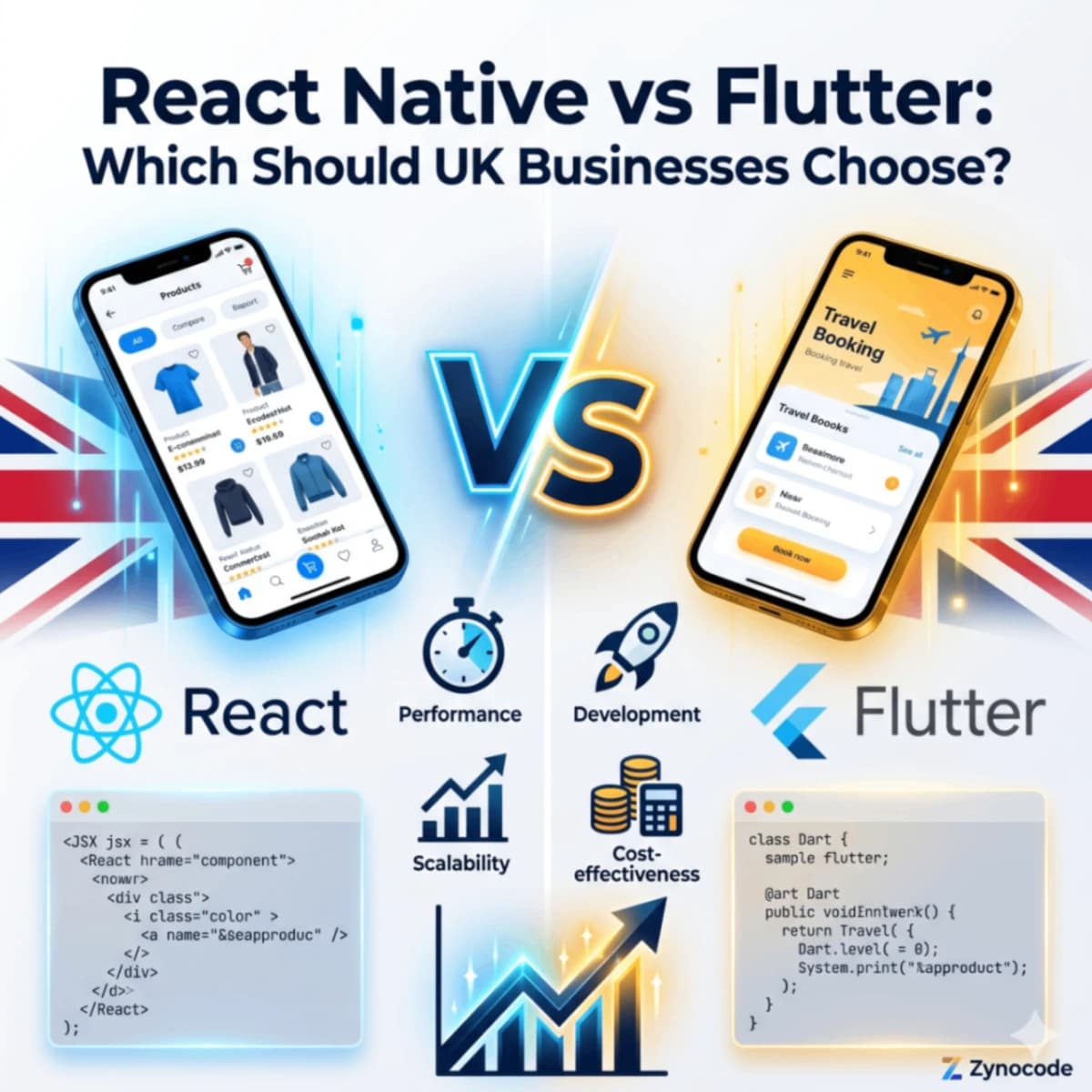
> TL;DR: For UK businesses, the choice between React Native and Flutter in 2026 largely depends on existing team skill sets, specific project needs, and desired time-to-market. Both frameworks are highly mature, offering robust cross-platform solutions that deliver near-native performance and user experiences. Evaluating your firm's technical ecosystem and long-term maintenance strategy is key to making the optimal decision.
Deciding between React Native vs Flutter in 2026: Which Should UK Businesses Choose? is a critical strategic move for any enterprise looking to scale its digital presence. As the mobile landscape becomes more fragmented and user expectations for performance reach an all-time high, selecting the right framework can mean the difference between a seamless launch and a costly technical debt. For businesses in Mumbai, Pune, and across the UK, the pressure to deliver high-quality Mobile App Development solutions while maintaining cost efficiency has never been greater.
The Evolution of Cross-Platform Frameworks in 2026
Definition: React Native vs Flutter evaluates two leading cross-platform mobile development frameworks, assessing their respective strengths, ecosystems, and suitability for UK businesses aiming to build efficient and high-performing applications in 2026.
The debate between React Native and Flutter has moved beyond simple feature comparisons. In 2026, both frameworks have reached a level of maturity where the 'native feel' is no longer a point of contention but a standard expectation. UK businesses are increasingly moving away from purely native development to embrace cross-platform solutions that offer faster time-to-market without compromising on the user experience. This shift is driven by the need for agility in a market where consumer trends change overnight.
When evaluating your options, it is essential to consider the broader technical ecosystem. Many firms find that they need comprehensive Software Development expertise to integrate these mobile frontends with complex cloud architectures. The choice between React Native and Flutter often hinges on your existing team's skill set and the specific requirements of your industry, whether you are in fintech, retail, or healthcare.
React Native vs Flutter in 2026: Which Should UK Businesses Choose?
This central question—React Native vs Flutter in 2026: Which Should UK Businesses Choose?—requires a nuanced look at the current state of both technologies. React Native, backed by Meta, has undergone a significant transformation with its 'New Architecture,' which has finally eliminated the performance bottlenecks caused by the JavaScript bridge. On the other hand, Flutter, powered by Google, continues to dominate the high-performance space with its Impeller rendering engine, offering 120Hz refresh rates that are indistinguishable from native code.
According to recent data from Statista, cross-platform frameworks now account for over 45% of all mobile applications developed globally. For a UK startup, the decision often comes down to the talent pool. React Native leverages the massive JavaScript and React ecosystem, making it easier to find developers in the UK. However, if you are looking to optimize your budget, you might learn how to outsource web development to India: A UK startup guide 2026 to find specialized talent that understands both frameworks at a fraction of the local cost.
Performance and Technical Architecture
Performance is the cornerstone of user retention. In 2026, React Native’s Fabric renderer and TurboModules allow for synchronous execution, meaning the app can handle complex animations and high-frequency data updates with ease. This makes it a strong contender for Web Application Development teams that want to share logic between their web and mobile platforms.
Flutter, however, maintains a slight edge in raw graphical performance. Because it does not rely on native system components but instead draws its own UI using the Skia or Impeller engines, it ensures total consistency across iOS and Android. This is particularly beneficial for brands that prioritize a unique, custom-branded interface. Before starting such a project, it is wise to understand how to write RFP for software project to ensure your technical requirements for performance are clearly communicated to your development partner.
Ecosystem, Libraries, and Community Support
The strength of a framework is often measured by its community. React Native benefits from the vast NPM library, allowing developers to plug in ready-made solutions for everything from authentication to complex data visualization. This speed of integration is vital for UK businesses aiming for a Rapid MVP (Minimum Viable Product).
Flutter's ecosystem, while slightly smaller, is more curated. The 'Pub.dev' repository offers high-quality packages that are frequently updated and maintained by the community and Google. For those still undecided, looking into a Flutter vs React Native Jaipur: Choosing App Dev Partner comparison can provide insights into how global development hubs are currently utilizing these tools to deliver high-ROI products. Additionally, ensuring your app is discoverable requires a solid SEO & Digital Marketing strategy from day one, regardless of the framework chosen.
UI/UX Design and Brand Consistency
In the global , where brand aesthetics are a major differentiator, UI/UX Design plays a pivotal role. React Native uses native components, which means your app will automatically look and feel like a standard iOS or Android app. This is great for utility apps where user familiarity is key.
Conversely, Flutter allows for 'pixel-perfect' designs. If your brand requires a highly bespoke visual language that ignores standard platform conventions, Flutter is the superior choice. Many of the top software development companies India startups rely on in 2026 prefer Flutter for design-heavy applications because it reduces the time spent on platform-specific CSS-like styling. This consistency ensures that a user in Mumbai has the exact same experience as one in Edinburgh, regardless of their device.
Talent Availability and Long-Term Maintenance
For UK-based CTOs, the long-term viability of a framework is as important as the initial build. React Native’s reliance on JavaScript means that your existing web team can often contribute to the mobile codebase, reducing the need for a siloed mobile department. This significantly lowers the barrier to entry for many UK SMEs.
Flutter requires knowledge of Dart, a language that is easy to learn but less common than JavaScript. However, the productivity gains reported by Flutter teams often offset the initial learning curve. Regardless of the framework, professional IT Support & Maintenance is required to handle OS updates and security patches that occur throughout the year. The UK's tech scene is vibrant, but the competition for local talent is fierce, making a hybrid model of local management and offshore execution increasingly attractive.
Cost Analysis for UK Businesses
Budgeting for a mobile project in 2026 involves more than just development hours. You must account for testing, deployment, and ongoing optimization. Generally, cross-platform development with either React Native or Flutter can save a UK business between 30% and 50% compared to building two separate native apps.
React Native might have a slight cost advantage in terms of developer hourly rates due to the sheer number of JS developers available. However, Flutter’s faster development cycle for complex UIs can lead to a lower total cost of ownership over time. UK businesses should weigh these factors carefully, considering both the immediate launch costs and the long-term maintenance fees associated with each framework.
Making the Decision: A Strategic Roadmap
So, when should a UK business choose React Native?
- When you have an existing React-based web application.
- When you need to rely heavily on native device features and third-party libraries.
- When your team is already proficient in JavaScript.
When should you choose Flutter?
- When you require a highly custom, brand-centric UI.
- When high-performance animations and graphics are central to the user experience.
- When you want a truly unified codebase that looks identical on all platforms.
Both frameworks are industry leaders for a reason. They offer the stability, performance, and scalability required to compete in the modern digital economy. By aligning your choice with your specific business goals and technical constraints, you can build a mobile product that not only meets but exceeds user expectations.
Next Steps for Your Mobile Strategy
Choosing the right framework is only the first step in your digital journey. To ensure your investment yields the highest possible returns, you need a clear understanding of the financial metrics involved in mobile development. Our team has developed a comprehensive guide to help you navigate these complexities.
Dive deeper into our sibling spoke: SaaS Development Cost in India (2026 Guide) ↗
Frequently Asked Questions

Written by Prashant Sharma
Engineering & Growth TeamPrashant Sharma is the Founder & CEO of Zynocode IT Solutions. As a seasoned tech visionary, software architect, and digital growth consultant, he leads enterprise engineering strategies, high-performance web systems, and custom AI implementations. Under his leadership, Zynocode has built a reputation as the premier website development company in Jaipur and a trusted AI automation agency in Jaipur delivering high-end solutions globally. For a detailed breakdown of his professional career and technical achievements, visit his dedicated Founder Profile page.
⚡Recommended Architecture & Delivery Hubs
Verified Guides & PodsRelated Services
Related Articles
SaaS Development Cost in India (2026 Guide)
Read article →Mobile App DevelopmentFood Delivery App Development Cost Jaipur
Read article →App DevelopmentMobile App Development Cost in Jaipur (2026): Ranges, Factors and Budgeting
Read article →Custom SoftwareDigital Inventory Portals for Kishangarh Marble Factories
Read article →Free Tools from Zynocode Labs
100% in-browser • Zero server uploads • No account required
Base64 Image & Asset Converter
Convert mobile UI icons and screenshots to Base64 strings client-side.
Client-Side Image Compressor
Optimize mobile splash screens and in-app graphics before compilation.
Zynocode CLI
Automate mobile build pipeline scripts and asset preprocessing.